How NYC's UPK and 3-K Programs Work — A Plain-English Guide for Parents

DATE
March 24, 2026
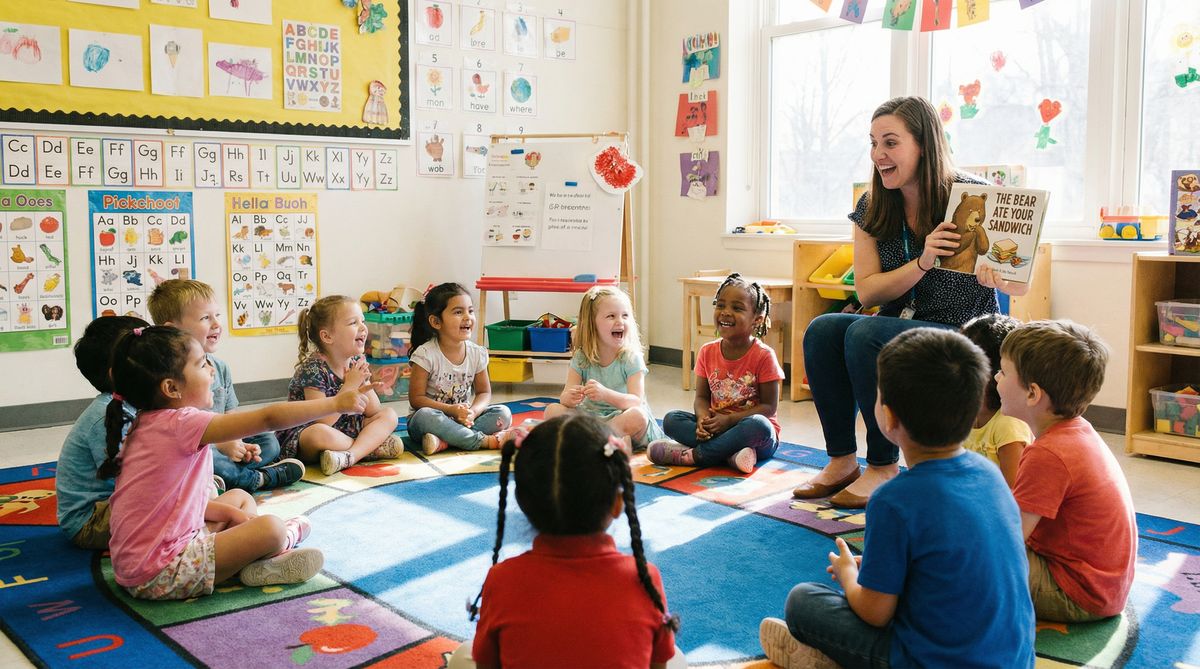
Children sitting in a circle during group time at an NYC preschool classroom

If you've got a young kid in New York City, you've probably heard the acronyms tossed around at the playground: UPK, 3-K, maybe even Pre-K for All. Parents talk about them like everyone already knows what they mean. But when you actually sit down to figure out how they work, where to apply, and whether your child qualifies — it gets confusing fast.

Here's the straightforward version. No jargon, no bureaucratic runaround. Just what you actually need to know.

What Are UPK and 3-K, Exactly?

UPK stands for Universal Pre-Kindergarten. It's a free, full-day program for four-year-olds run through the NYC Department of Education. Your child gets a seat in a classroom — either at a public school or at a community-based organization (like a daycare or learning center) — at zero cost to you.

3-K is the same concept, but for three-year-olds. NYC launched it in 2017 and has been expanding it district by district ever since. As of the 2025-2026 school year, 3-K is available in all 32 school districts across the city.

Both programs run during the school year on the DOE calendar. That means September through June, with breaks for holidays and school vacations. The school-day hours are typically 6 hours and 20 minutes, but many community-based sites — including centers like Sunshine Learning Center — offer extended day options that cover a full working parent's schedule.

Who Qualifies?

This is the best part: there are no income requirements. UPK and 3-K are universal programs, which means every NYC child who turns the right age by December 31 of the enrollment year is eligible. You don't need to prove income, immigration status, or anything else. If your kid is the right age and you live in New York City, they qualify.

For 3-K, your child must turn 3 by December 31 of the year they'd start. For UPK, they must turn 4 by the same date. So if your child turns 4 in November 2026, they're eligible for UPK starting September 2026.

How the Application Process Works

Applications open through MySchools.nyc, the city's centralized enrollment platform. Here's the typical timeline:

  • November-December: The DOE releases the directory of available programs for the upcoming school year
  • January-February: Applications open on MySchools. You can rank up to 12 programs in order of preference.
  • March-April: Application deadline (exact date varies by year — check MySchools for current dates)
  • Late spring: Offers go out. You'll get matched to one program based on your rankings and available seats.
  • Summer: Waitlist movement happens. If you didn't get your top choice, you might still move up.

You can apply to a mix of DOE school sites and community-based organizations. There's no penalty for mixing — rank them however you want based on what matters to you.

DOE Schools vs. Community-Based Organizations

This is where most parents get tripped up. When you browse MySchools, you'll see two types of programs: ones run directly inside public schools, and ones run at community-based organizations (CBOs). Both are free under UPK/3-K. Both follow DOE standards. But they're not identical.

DOE school sites operate on the strict school calendar and school-day hours. Drop-off is usually around 8:00-8:20 AM and pickup around 2:20-2:40 PM. There's no extended day option at most school sites unless the school has a separate after-school program (which usually costs money).

Community-based organizations — which include licensed daycare centers, Head Start programs, and learning centers — often offer extended hours that cover 8, 9, or even 10+ hours per day. Many CBOs also operate year-round, so your child has continuity through the summer months. If you're a working parent who needs coverage beyond 2:30 PM, a CBO is almost always the better fit.

At Sunshine Learning Center, for example, families enrolled in UPK or 3-K get the full DOE-funded program hours plus extended day coverage — so parents heading to work in East Harlem, Mott Haven, or Coney Island don't have to scramble for afternoon care.

What About Vouchers and HRA Subsidies?

UPK and 3-K are separate from childcare vouchers. But here's what a lot of parents don't realize: you can sometimes use both.

If your child is in a UPK or 3-K program at a community-based site that also offers extended hours, the DOE covers the school-day portion. For the extended hours (before and after the school day), you may be able to use an HRA childcare voucher or ACS subsidy to cover that cost — depending on the site and your eligibility.

HRA vouchers are income-based and available to families receiving public assistance or those who qualify through employment. The application goes through your local HRA office or online through ACCESS HRA. It's a separate process from MySchools, and the two systems don't talk to each other, so you'll need to coordinate on your own.

If your household income is low enough to qualify, combining UPK/3-K with a voucher can mean truly zero-cost childcare for the full day. It takes some legwork to set up, but it's worth investigating.

What Your Child Actually Does All Day

Both UPK and 3-K programs follow developmentally appropriate curricula approved by the DOE. Most community-based sites use the Creative Curriculum, which is research-backed and built around learning through play, exploration, and hands-on activities.

A typical day might look like:

  • Morning meeting/circle time: Songs, calendar, weather, building community
  • Choice time/centers: Kids rotate through blocks, dramatic play, art, sensory, writing
  • Small group instruction: Teacher-led activities targeting specific skills
  • Outdoor play: Gross motor time on the playground or in a play yard
  • Lunch and rest: Family-style meals, followed by quiet time or nap
  • Read-alouds and music: Literacy and creative expression woven throughout

The goal isn't drilling letters and numbers into three-year-olds. It's building the foundation — social skills, curiosity, self-regulation, problem-solving — that makes kindergarten (and everything after) go smoother.

Choosing Between Programs: What Actually Matters

When you're ranking your 12 choices on MySchools, here's what to focus on beyond the basics:

Hours and schedule. Does the program's schedule match your work hours? If you need care before 8 AM or after 3 PM, prioritize CBOs with extended day.

Location and commute. A program ten blocks from your apartment might sound fine until you're doing that walk in January with a reluctant three-year-old. Think about your actual daily route — near home, near work, near the subway stop you use. Parents in neighborhoods like Yorkville or Harlem often find that a center right on their commute line beats one that's technically "closer" on a map.

Classroom ratios. The DOE mandates specific teacher-to-child ratios (1:6 for 3-K, 1:9 for UPK, with assistants), but some programs staff above those minimums. Ask during your tour.

Tour the space. This matters more than any website or rating. Visit during active hours. Watch how teachers interact with kids. Are children engaged or zoned out? Is the room organized? Do the adults seem calm or frazzled? Trust your gut — you'll learn more in 20 minutes of observation than hours of online research.

Outdoor space. Not every program has its own playground. Some use nearby public parks, which is fine — but ask about the plan for rainy or cold days.

Communication with parents. How does the program share updates? Daily reports? An app? Weekly newsletters? You want to know what your kid did today without having to interrogate a three-year-old who will only tell you they "played."

Common Mistakes Parents Make

Only ranking one or two programs. Use all 12 slots. The algorithm works in your favor when you have more options ranked. There's no strategic benefit to ranking fewer — it doesn't make you more likely to get your top choice.

Ignoring CBOs. Some parents assume DOE school sites are "better" because they're in a school building. That's not how it works. Many CBOs have smaller class sizes, more experienced early childhood teachers, and better facilities for young kids than a Pre-K room squeezed into an elementary school hallway.

Missing the deadline. The MySchools deadline is firm. If you miss it, you'll be placed on waitlists for programs with open seats after the main round — and your options shrink dramatically. Set a calendar reminder. Actually, set three.

Not applying for both 3-K and vouchers. These are separate systems. If you qualify for both, apply to both. Don't leave money on the table.

Forgetting about summer. UPK and 3-K run September through June. If you need summer care, you'll need a separate plan — unless your CBO offers year-round enrollment, which many do.

Key Dates and Resources

Bookmark these:

  • MySchools.nyc — The official application portal for 3-K and UPK
  • 311 — Call for help with applications, enrollment questions, or to find programs near you
  • ACCESS HRA (a069-access.nyc.gov) — Apply for childcare vouchers online
  • NYC DOE Family Welcome Centers — In-person help with enrollment, one in each borough

Applications for the 2026-2027 school year typically open in January 2026. If you're reading this and haven't applied yet, go to MySchools right now. Seriously. It takes about 15 minutes.

The Bottom Line

UPK and 3-K are genuinely excellent programs. Free, high-quality early education for every NYC kid — that's not nothing. The application process has some moving parts, but once you understand the timeline and your options, it's manageable.

If you're looking at programs in East Harlem, Harlem, Mott Haven, Yorkville, or Coney Island, Sunshine Learning Center offers UPK and 3-K seats with extended day options that actually work for parents with full-time jobs. You can learn more or schedule a tour at sunshinenewyork.com.

Your kid deserves a great start. These programs exist to make that happen — take advantage of them.

Explore moreBlogs & Articles

2
Min
March 31, 2026

What Is the Creative Curriculum? A Parent's Guide to How Your Child Actually Learns

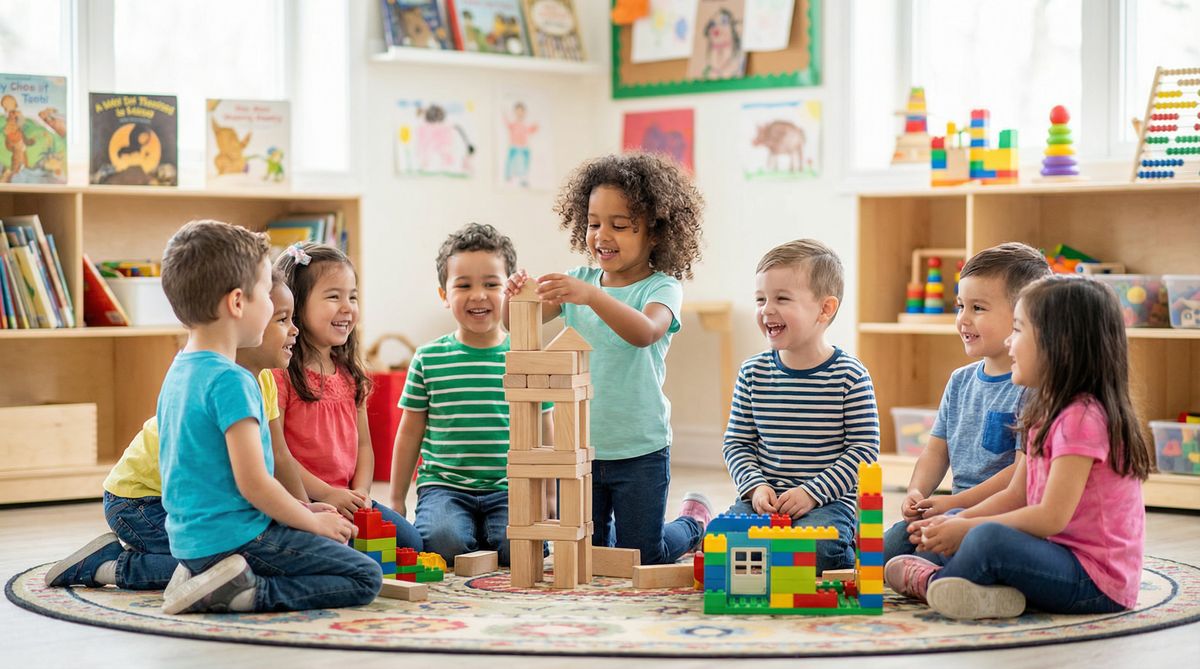
Preschool children building with colorful blocks during a Creative Curriculum activity

You're reading through daycare brochures and one keeps mentioning something called "the Creative Curriculum." Sounds nice. But what does it actually mean for your kid's day? What are they doing at 10 AM on a Tuesday — and why?

Here's the straightforward version: what the Creative Curriculum is, how it works in real classrooms, and why thousands of preschool and daycare programs across the country (including plenty right here in NYC) use it.

The Creative Curriculum in 60 Seconds

The Creative Curriculum is a research-based framework for early childhood education, developed by Teaching Strategies. It covers children from birth through age five and gives teachers a structured way to plan activities that match where each child actually is developmentally — not where a textbook says they should be.

It's built around one core idea: young children learn best through exploration and play, guided by teachers who know what to look for and how to nudge things forward.

That probably sounds obvious. But the difference between "we let kids play" and "we use intentional, observation-based play to build specific skills" is enormous. The Creative Curriculum is the second one.

How It Actually Works in the Classroom

Walk into a Creative Curriculum classroom and you'll notice something right away: interest areas. Instead of rows of desks (this isn't elementary school), the room is divided into defined spaces — a block area, a dramatic play corner, an art station, a library nook, a discovery table, a sand and water area.

Each area is deliberately set up with materials that invite specific kinds of learning. The block area isn't just blocks — it's spatial reasoning, physics, cooperation, and early math. The dramatic play corner isn't just dress-up — it's language development, social skills, and emotional regulation.

Teachers rotate materials based on what they call "studies" — deep dives into topics that emerge from what kids are curious about. If the class is fascinated by construction trucks they saw on Lexington Ave, the teacher might build a whole study around buildings and construction. Blocks become skyscrapers. Art becomes blueprints. Books become stories about architects and builders.

The Daily Flow

A typical day in a Creative Curriculum classroom follows a predictable routine — and that predictability is intentional. Young kids feel safer when they know what's coming next. A morning might look like:

  • Morning meeting: Songs, calendar, discussing the day's plan
  • Choice time: Children pick which interest areas to explore (this is the big block — usually 45-60 minutes)
  • Small group: Teacher-led activity targeting specific skills with 4-5 kids
  • Outdoor play: Gross motor, fresh air, social interaction
  • Read-aloud: Book connected to the current study
  • Meals and rest: Built into the rhythm naturally

The magic is in choice time. Kids aren't told "today we're doing blocks." They choose. And that choice — that sense of agency — is a huge part of how they develop motivation and self-regulation.

The 38 Objectives: What Teachers Are Actually Tracking

Behind the scenes, Creative Curriculum teachers are observing like hawks. The framework includes 38 objectives for development and learning, organized into areas like:

  • Social-emotional: Manages feelings, follows limits, makes friends
  • Physical: Travels around obstacles, uses writing tools, coordinates hand movements
  • Language: Listens and understands, uses expanding vocabulary, tells stories
  • Cognitive: Solves problems, thinks symbolically, connects new experiences to prior knowledge
  • Literacy: Recognizes letters, engages with books, writes name
  • Math: Counts, compares quantities, recognizes shapes and patterns

Teachers document what they see — photos, notes, work samples — and use a platform called GOLD to track each child's progress along these objectives. It's not grading. It's mapping. Where is this child right now, and what's the next step?

This is where the Creative Curriculum earns its reputation. A teacher might notice that Marcus can sort objects by color but not by size yet. So she'll set up a small-group activity with different-sized containers at the water table. It's targeted, it's play-based, and Marcus has no idea he's being taught — he just thinks he's pouring water.

Why Play-Based Doesn't Mean Unstructured

This is the biggest misconception parents have. "Play-based" doesn't mean kids are just messing around for six hours while teachers scroll their phones. (If that's what you see on a tour, leave.)

In a well-implemented Creative Curriculum classroom, every material is placed with intention. Every teacher interaction during play has a purpose. When a teacher sits down in the block area and asks, "How many more blocks do you think you'll need to make it as tall as you?" — that's math instruction. When she says, "Tell me about what you're building" — that's language development.

The research backs this up consistently. The National Institute for Early Education Research has found that high-quality play-based programs produce better outcomes in literacy, math, and social skills than direct-instruction programs — especially for children from lower-income families. Kids don't just learn more; they retain more, because they built the knowledge themselves instead of having it poured in.

How This Compares to Other Approaches

NYC parents shopping for preschool will run into several curriculum names. Here's how they stack up:

Montessori emphasizes individual work with specific materials in a mixed-age classroom. It's more self-directed and less teacher-guided than Creative Curriculum. Beautiful method, but some kids (especially very social ones) thrive more with the collaborative, project-based structure of CC.

Reggio Emilia is project-based and child-led, with heavy emphasis on documentation and the arts. It shares DNA with Creative Curriculum but is less standardized — how it looks depends entirely on the school.

HighScope is the closest cousin to Creative Curriculum. Both are research-based, both use plan-do-review cycles, both track developmental indicators. The main difference is implementation: Creative Curriculum is more widely adopted in community-based programs and Head Start centers.

Academic/direct instruction programs focus on worksheets, letter drills, and sit-down learning. Research consistently shows these produce short-term gains that fade by first grade, while also increasing anxiety in young children. For three- and four-year-olds, this approach asks them to do things their brains aren't wired for yet.

What to Ask When a Daycare Says "We Use the Creative Curriculum"

Here's the catch: saying you use the Creative Curriculum and actually implementing it well are two different things. Some programs buy the books and hang a poster. Others invest in training, coaching, and fidelity checks.

When you tour a center that claims to use CC, ask:

  • "Can you show me your current study?" Teachers should be able to tell you what topic the class is exploring and why.
  • "How do you use GOLD?" If they're using Creative Curriculum properly, they're using the GOLD assessment tool. Ask how often they update it.
  • "What does choice time look like?" If kids don't get meaningful free-choice periods, the curriculum isn't being followed.
  • "How do you handle kids at different levels?" The whole point of CC is individualization. Teachers should describe how they differentiate.
  • "Can I see the interest areas?" Walk the room. Are the areas well-defined, stocked with rich materials, and labeled? Or is it a room with some toys scattered around?

A strong Creative Curriculum classroom feels alive. You'll see children's work on the walls (not Pinterest-perfect teacher projects). You'll hear conversations between kids and teachers. You'll notice materials that connect to a theme. Trust your gut — the energy of a good classroom is unmistakable.

What This Means for Your Child's Kindergarten Readiness

NYC parents worry about kindergarten readiness — understandably, since the DOE's expectations have ratcheted up over the years. Here's the good news: the Creative Curriculum's 38 objectives align directly with the NYC DOE's Pre-K for All standards and the Head Start Early Learning Outcomes Framework.

By the time a child completes a well-run Creative Curriculum preschool program, they typically can:

  • Recognize most letters and the sounds they make
  • Write their first name
  • Count to 20 and understand one-to-one correspondence
  • Sit for a group activity for 15-20 minutes
  • Express their needs verbally
  • Take turns, share, and resolve basic conflicts
  • Follow multi-step directions

But beyond the checklist, these kids walk into kindergarten with something harder to measure: confidence. They've spent years making choices, solving problems, and learning that their ideas matter. That mindset carries them further than any flashcard drill ever could.

Where to Find Creative Curriculum Programs in NYC

The Creative Curriculum is used widely across NYC's publicly funded programs. Most 3-K and UPK sites in the five boroughs use it, along with many Head Start and Early Head Start centers. Community-based organizations — including Sunshine Learning Center, which operates eight locations across East Harlem, Harlem, Yorkville, Mott Haven, and Coney Island — often use Creative Curriculum as their foundation because it's flexible enough to serve diverse communities while maintaining high standards.

If you're applying through MySchools for 3-K or Pre-K seats, you can ask individual programs about their curriculum during tours. It's always worth asking — not every program lists it on their profile.

The Bottom Line

The Creative Curriculum isn't magic. It's a well-designed system that gives teachers a roadmap and gives children the freedom to learn the way their brains actually work — through hands-on exploration, social interaction, and play that looks fun because it is fun.

When it's implemented well, your child spends their days building, creating, questioning, and growing. They don't sit at desks filling in worksheets. They don't memorize facts they'll forget. They develop the skills and the confidence to figure things out — which, when you think about it, is the whole point.

Want to see the Creative Curriculum in action? Schedule a tour at Sunshine Learning Center and watch how it works in a real classroom.

READ ARTICLE
2
Min
March 26, 2026

Separation Anxiety at Daycare: What's Normal and What Actually Helps

Parent dropping off child at daycare — a moment that gets easier with time

Your kid is screaming. Snot everywhere. Arms locked around your leg like a baby octopus. The teacher is gently trying to peel them off while you stand there wondering if you're a terrible person for leaving.

Sound familiar? You're not alone. Separation anxiety at daycare drop-off is one of the most common — and most gut-wrenching — experiences parents deal with. The good news: it's completely normal, it's actually a sign of healthy attachment, and it does get better.

Here's what's really going on, what's normal versus what's not, and the strategies that actually work — based on what we've seen with hundreds of families, not just what sounds nice on a parenting blog.

Why Separation Anxiety Happens (And Why It's a Good Sign)

Between about 8 months and 3 years old, kids go through a developmental stage where they become acutely aware that you exist even when you're not in the room. Psychologists call it "object permanence." Your child calls it absolute panic.

Here's the thing: separation anxiety means your child has a strong, secure attachment to you. That's exactly what you want. Kids who don't react at all to a parent leaving — that can actually be more concerning from a developmental standpoint.

The anxiety peaks between 10-18 months and again around 2 years old. If your kid just started daycare during one of these windows, you're getting hit with a double whammy: new environment plus peak clinginess. It's not your fault, and it's not the daycare's fault. It's just biology doing its thing.

What's Normal vs. What's Worth a Conversation

Totally Normal

  • Crying at drop-off for the first 2-4 weeks (sometimes longer)
  • Clinging to you, hiding behind your legs, refusing to walk in
  • Regression in other areas — sleep disruptions, extra tantrums at home, wanting a bottle again
  • Being fine all day at daycare but melting down the second they see you at pickup
  • Having good days and bad days with no obvious pattern

Worth Talking to the Teacher About

  • Crying that continues throughout the entire day, not just drop-off, after 4-6 weeks
  • Refusing to eat or drink at daycare consistently
  • Physical symptoms like repeated vomiting or diarrhea that only happen on daycare days
  • Extreme behavioral changes at home that aren't improving over time
  • Your child seeming genuinely afraid (not just sad) about going

The key word is "over time." Most kids settle in within 2-6 weeks. Some take longer, especially if they've never been in group care before. If you're at week 8 and things aren't improving at all, that's when to have a deeper conversation with the teachers and possibly your pediatrician.

The Drop-Off: What Actually Works

Build a Goodbye Ritual

Kids live for routine. A predictable goodbye ritual gives them a sense of control over an otherwise overwhelming moment. It doesn't have to be complicated:

  • Two hugs, a high-five, and "See you after snack time"
  • A special handshake
  • Looking out the window together and waving
  • Drawing a heart on each other's hands (the "kissing hand" trick actually works for a lot of kids)

The ritual should take under a minute. Longer goodbyes don't help — they give anxiety more room to build.

Keep It Short and Confident

This is the hardest part. Your kid is crying and every cell in your body is screaming "STAY." But dragging out the goodbye — coming back for one more hug, hovering by the door, looking through the window with tears in your own eyes — makes it worse.

Kids read your energy like a book. If you seem nervous or unsure, they think: "Wait, should I be worried? Mom looks worried. THIS MUST BE DANGEROUS." If you seem calm and matter-of-fact, they get the message that this is safe, even if they don't love it.

Say goodbye, tell them when you'll be back in terms they understand ("after nap time" beats "at 5:30"), and walk out. The teachers have this. That's literally their job.

Never Sneak Out

We get it — it's tempting. They're distracted by the train table, you could just... slip away. Don't. When your child realizes you disappeared without warning, it doesn't prevent a meltdown. It creates a bigger one, plus it erodes their trust. Now they're not just sad you left — they're anxious you might vanish at any moment.

Always say goodbye, even if it triggers tears. Predictability builds security.

What Teachers Do After You Leave

Here's a secret that might help: most kids stop crying within 5-10 minutes of drop-off. Seriously. Ask any daycare teacher and they'll tell you the same thing. The transition moment is the hard part. Once you're gone and the classroom routine kicks in, kids get pulled into activities pretty quickly.

Good teachers have a whole toolkit for this:

  • Redirecting to a favorite activity immediately
  • Offering comfort items (a special stuffed animal that lives at school)
  • Pairing anxious kids with a confident buddy
  • Giving them a "job" — being the helper who feeds the fish or passes out napkins
  • Sitting with them one-on-one until they're ready to join the group

At Sunshine Learning Center, our teachers in the toddler and twos classrooms are especially tuned into this. They've seen every flavor of separation anxiety and they know how to meet each kid where they are. But this is true at any quality daycare — experienced teachers aren't rattled by tears at drop-off. They expect them.

What You Can Do at Home

Practice Short Separations

If daycare is your child's first time away from you, the adjustment is going to be steeper. Before starting — or even during the first few weeks — practice separations in low-stakes environments. Leave them with a grandparent for an hour. Drop them at a friend's house for a playdate. Go to the grocery store alone while your partner stays home.

Each time you leave and come back, you're proving the most important lesson: you always come back.

Talk About Daycare Positively (But Don't Overdo It)

Mention daycare casually and positively. "Tomorrow you get to see your friend Marcus!" or "I wonder what you'll build in the block area today." Don't turn it into a sales pitch — kids can smell desperation. Just weave it into normal conversation so it feels like a regular part of life, not a big scary event.

Read the Room on Comfort Objects

Some daycares allow a small comfort item from home — a family photo, a little stuffed animal, a blanket. If yours does, use it. A transitional object gives kids a tangible piece of "home" to hold onto. Check with your center's policy first — NYC DOH regulations mean some items may need to stay in cubbies rather than nap areas.

Don't Interrogate at Pickup

"What did you do today? Did you cry? Were you sad? Did you miss me? Did you eat? Who did you play with?" Chill. Your kid just had a full day of stimulation and social interaction. Give them a hug, tell them you missed them, and let the details come out naturally — usually at the most random times, like in the bath three days later.

The Pickup Meltdown: Why They Lose It When They See You

You walk in. Your child was happily playing. They see you and immediately burst into tears. What gives?

This is actually a compliment, even though it doesn't feel like one. Your child held it together all day — used their coping skills, followed the routine, managed their emotions. The second they see you — their safe person — all that effort releases. It's like how you hold it together during a stressful work day and then fall apart on the couch at home.

It doesn't mean they had a bad day. It means they feel safe enough with you to finally let go. Give them a few minutes. They'll regulate.

When One Parent Has It Harder

In a lot of families, drop-off is dramatically worse with one parent than the other. Usually (not always) it's harder with the primary caregiver — the person the child spends the most time with. This doesn't mean the other parent is less loved. It means the child has identified their "safe base" and separating from that base is harder.

If this is your situation, try having the "easier" parent do drop-off for a while. It's not a failure — it's a strategy. Use whatever works.

A Realistic Timeline

Every kid is different, but here's what a typical adjustment looks like:

  • Week 1: Rough. Lots of tears, possibly at drop-off AND throughout the day. This is peak hard.
  • Weeks 2-3: Crying at drop-off but recovering faster. Starting to engage with activities and other kids. Still clingy at pickup.
  • Weeks 3-4: More good days than bad. Might still cry at drop-off but it's shorter. Teachers report they're participating and even laughing.
  • Weeks 4-6: Drop-off tears are rare or brief. They have a routine, maybe a friend. Walking in on their own.
  • Occasional regressions: After weekends, holidays, sick days, or big changes at home. This is normal and temporary.

Some kids breeze through in a week. Some take two months. Neither timeline means anything about your child's temperament, your parenting, or the quality of the daycare.

What to Ask the Daycare

You don't have to white-knuckle this alone. Good daycares expect these questions and are happy to answer them:

  • "How long does the crying typically last after I leave?"
  • "Can you send me a photo or update mid-morning for the first week?"
  • "What's your approach when a child is really struggling to settle?"
  • "Is there anything I can do differently at drop-off?"
  • "How will you let me know if the anxiety isn't improving?"

Any center that gets defensive about these questions is a red flag. Transparency about how your child is doing — especially during the transition period — is a baseline expectation.

The Part Nobody Talks About: Your Anxiety

Let's be honest for a second. Separation anxiety isn't just a kid thing. Plenty of parents — especially first-time parents — are dealing with their own version of it. Guilt about going back to work. Fear that something will happen. Worry that your child will feel abandoned. Comparison with other parents whose kids "adjusted right away."

All of that is valid. And all of it is worth talking about — with your partner, a friend, a therapist, whoever. The transition to daycare is a big deal for the whole family, not just the kid. Give yourself the same grace you'd give your child.

If you're looking for a daycare that takes the adjustment period seriously — where teachers actually know your kid's name and communicate with you daily — you can schedule a tour at any of Sunshine Learning Center's NYC locations at sunshinenewyork.com. We've walked hundreds of families through this exact transition, and we'll walk yours through it too.

READ ARTICLE
2
Min
March 26, 2026

What Is the Creative Curriculum (And Why Does It Matter for Your Child)?

You're touring preschools. A teacher mentions: "We use the Creative Curriculum."

You nod knowingly. But internally, you're wondering: What is that? Is it better than other curriculums? Should I care?

Here's the truth: Yes, you should care. Not all curriculums are created equal. And understanding what your child will be learning - and HOW they'll learn - is one of the most important decisions you make as a parent.

At Sunshine Learning Center, we use the Creative Curriculum. Today, we're breaking down what it is, why it works, and what you can expect when your child learns this way.

The Short Answer

The Creative Curriculum is a play-based, child-directed approach to early childhood education.

Instead of teachers lecturing or drilling facts, children learn through:

  • Play (structured and free play)
  • Exploration (hands-on discovery)
  • Problem-solving (figuring things out)
  • Following their interests (what excites them)
  • Social interaction (learning WITH other kids)

The teacher's job isn't to deliver information. It's to create an environment where learning happens naturally.

The Longer Explanation (Because It's Interesting)

Where Did Creative Curriculum Come From?

The Creative Curriculum was developed in the 1980s by Diane Trister Dodge, an early childhood education expert. She was frustrated with how many preschools taught kids - mostly with worksheets, rote memorization, and sitting still.

She asked a revolutionary question: What if we let kids learn the way kids actually learn?

Kids learn by doing, experimenting, playing, and exploring. They don't learn by sitting at a desk copying letters for 45 minutes.

Dodge created a framework that put this principle into practice. And decades later, it's still one of the most respected, research-backed approaches to early childhood education.

What Makes It Different From Other Curriculums?

Traditional approach (older model):

  • Teacher decides what everyone learns today
  • Everyone does the same activity
  • Focus: academic skills (letters, numbers, colors)
  • Assessment: can they recite the ABC song?

Creative Curriculum approach:

  • Children's interests drive the learning
  • Multiple activities simultaneously (kids choose)
  • Focus: whole child development (academic, social, emotional, physical)
  • Assessment: can they APPLY what they learned in real situations?

Example:

  • Traditional: "Today we're learning about bugs. Everyone color this ant worksheet."
  • Creative Curriculum: Set up a bug exploration station (real bugs, magnifying glasses, bug books). Let kids explore. When they ask questions ("Why do ants work together?"), THAT's when you teach about insects, social structures, teamwork - through their curiosity.

The kid who wasn't interested in bugs yesterday? They might become fascinated when they discover a real ant trail. The same worksheet wouldn't have hooked them.

The Four Pillars of Creative Curriculum

Creative Curriculum is built on four foundational ideas. Understanding these helps you see what your child is actually learning every day.

1. Children Develop Holistically (Not Just Academically)

Your child isn't just a brain in a small body. They're:

  • Physical learners (building gross/fine motor skills)
  • Emotional beings (learning to express and manage feelings)
  • Social creatures (figuring out friendships and empathy)
  • Cognitive thinkers (solving problems, asking questions)
  • Creative minds (expressing ideas through art, music, movement)

A preschool that only focuses on ABCs is ignoring 80% of your child's development.

In the Creative Curriculum classroom, a simple play scenario teaches ALL of this:

Example: Sand and water table

  • Physical: Pouring, scooping, hand-eye coordination (fine motor)
  • Cognitive: "If I pour faster, does it flow differently?" (problem-solving, cause-and-effect)
  • Social: "Can we build a sandcastle together?" (sharing, collaboration)
  • Emotional: Managing frustration when the sand castle collapses, celebrating when it works
  • Creative: "What if we add shells and make a mermaid world?" (imagination)

One activity. Multiple kinds of learning. That's the power of Creative Curriculum.

2. Play Is the Primary Vehicle for Learning

You might think: "Preschool is for learning. Shouldn't they spend more time on academic skills?"

Here's what neuroscience says: Play IS how young kids learn best.

When a child plays, their brain is:

  • Making neural connections (building brain pathways)
  • Practicing problem-solving (what happens if I do this?)
  • Developing impulse control (taking turns, waiting)
  • Building memory (repeating behaviors, learning patterns)
  • Processing emotions (acting out scenarios safely)

A child who spends 2 hours playing in a preschool classroom learns more than a child doing worksheets for 2 hours.

In a Creative Curriculum classroom:

  • Block building teaches spatial reasoning, planning, collaboration
  • Dramatic play (playing house, store, doctor) teaches social skills and language
  • Art teaches creative expression, fine motor skills, decision-making
  • Outdoor play teaches risk assessment, physical confidence, scientific observation

3. Teachers Are Facilitators, Not Lecturers

This is a big shift from traditional school models.

Traditional teacher role: "I teach. You learn."

Creative Curriculum teacher role: "I create the environment. I observe. I ask questions that help you discover."

A teacher using Creative Curriculum:

  • Watches what children are interested in
  • Asks open-ended questions ("What would happen if...?" "How could we...?")
  • Suggests materials or ideas (without directing)
  • Follows the child's lead in conversations
  • Documents learning through observation
  • Adjusts the classroom based on children's interests

Example:

A child builds a tall tower with blocks. It topples.

  • Directive teacher: "You knocked it down. Let's sit down for circle time."
  • Creative Curriculum teacher: "Your tower fell! What made it topple? What could make it stronger? Would wider blocks help? Want to try again?"

The second approach teaches problem-solving, persistence, and scientific thinking.

4. Assessment Is Ongoing and Observational (Not Test-Based)

You won't see your preschooler taking tests in a Creative Curriculum classroom. There's no "final exam" for knowing the alphabet.

Instead, teachers are constantly:

  • Observing what children do and say
  • Taking notes on skills they see developing
  • Photographing/recording learning moments
  • Identifying interests and strengths
  • Planning next steps based on individual children

What this means for you as a parent:

  • You get detailed, narrative descriptions of your child's learning (not just "doing well")
  • Teachers know YOUR child, not a checklist
  • Learning is personalized to your child's pace

What Your Child Actually Learns in a Creative Curriculum Preschool

Parents often worry: "If they're just playing, will my child learn their ABCs?"

The answer is yes - and so much more.

By age 4-5, children in Creative Curriculum classrooms typically have:

Academic Skills

  • Letter recognition and phonemic awareness
  • Counting, number concepts, basic math
  • Early writing skills (scribbles, letters)
  • Vocabulary expansion

Social-Emotional Skills

  • Ability to follow classroom routines
  • Cooperation and turn-taking
  • Expressing emotions verbally
  • Making friends and resolving conflicts
  • Confidence and self-regulation

Cognitive Skills

  • Problem-solving abilities
  • Cause-and-effect thinking
  • Memory and recall
  • Following multi-step directions
  • Creative and flexible thinking

Physical Skills

  • Coordination, balance, strength
  • Fine motor skills (holding pencils, using scissors)
  • Body awareness and confidence

Important note: The Creative Curriculum isn't just academic prep. It's whole-child development. Your child will be smarter, more confident, more emotionally intelligent, and more creative. The ABCs are just one small part of that growth.

Is Creative Curriculum Right for Your Child?

The short answer: Yes, probably.

Creative Curriculum works for most children. It's flexible enough to accommodate different learning styles and paces.

Your child might particularly thrive if:

  • They're naturally curious and ask lots of questions
  • They learn best by doing (hands-on kids)
  • They have a strong personality and opinions
  • They're creative or artistic
  • They've shown independence or self-direction
  • They need movement and active play to stay engaged

Your child needs careful implementation if:

  • They struggle with unstructured environments (need more boundaries)
  • They have sensory sensitivities (classrooms can be overstimulating)
  • They have autism or ADHD (Creative Curriculum CAN work, but needs thoughtful structure + communication with teachers)
  • They're extremely shy or anxious (they may need smaller group transitions)

Reality check: Even if your child "needs more structure," Creative Curriculum classrooms DO have structure. It's just not rigid. Structure comes from routines, clear boundaries, and predictable patterns - not from sitting at desks. Good Creative Curriculum teachers know how to balance open-ended learning with enough structure that all kids feel secure.

Questions to Ask When You Visit a Creative Curriculum Preschool

If you're touring a school that uses Creative Curriculum, ask:

1. How is the day structured?

  • What's the balance of free play vs. directed activities?
  • What are your daily routines?
  • How much time outside?

2. How do you assess learning?

  • Do you take observations/photos?
  • Do parents get regular updates on learning?
  • How do you identify when a child needs help?

3. What happens with children who struggle with play-based learning?

  • How do you support kids who need more structure?
  • How do you handle anxious kids?
  • Do you modify activities for different learning styles?

4. How do parents stay involved?

  • How often do we get updates?
  • Can we volunteer or observe?
  • How do you communicate about our child's day?

5. What about academics?

  • How do kids learn letters and numbers?
  • When do you introduce writing/reading?
  • Do you send home worksheets or homework?

The Bottom Line

The Creative Curriculum isn't a shortcut or a "just play" approach. It's a research-backed, intentional framework for how young children develop.

Your child WILL learn their ABCs, count to 20, and recognize their name. But they'll also develop confidence, creativity, social skills, and a love of learning.

That's not just preschool. That's the foundation for a lifetime learner.

A Note on Implementation

Here's the important part: Creative Curriculum is only as good as the teachers implementing it.

A poorly executed Creative Curriculum classroom looks like chaos. A well-executed one looks like organized learning disguised as play.

When you visit a preschool, observe:

  • Do the teachers interact with kids or just supervise?
  • Do kids have choices and agency?
  • Is there a balance of structure and freedom?
  • Do kids look engaged and happy?
  • Do teachers ask questions or give commands?

The curriculum is important. But great teachers matter more.

About Sunshine Learning Center

We've designed our classrooms around Creative Curriculum principles because we believe in whole-child development. Your child won't just learn facts here. They'll develop curiosity, confidence, and a genuine love of learning.

Ready to experience our Creative Curriculum classroom? Schedule a tour at your neighborhood location →

READ ARTICLE
Become a Sunshine Teacher

Join a team that shares your passion.

Apply TODAY
Music
Language
Movement
Culture
Community
Arts
Academics
Social Skills